
DIY Safety
Why DIY Christmas Lights Aren't Worth the Risk
The honest case against climbing your own roof in December — insurance gaps, ladder accidents, and what a professional carries that you don't.
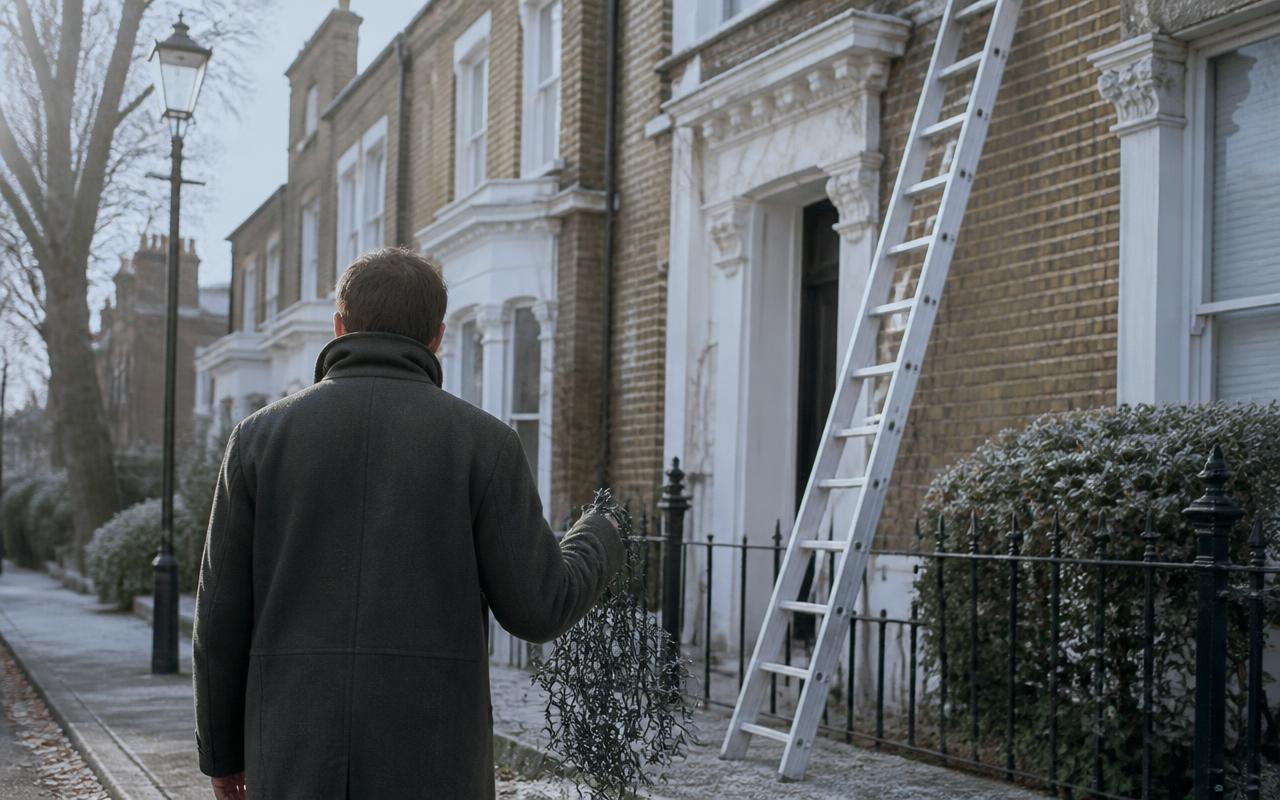
DIY Christmas lights are not worth the risk: a fall from a ladder can mean serious injury, and your home insurance may not cover an accident while working at height — check your policy before you climb.
The insurance black hole
You assume your home insurance has you covered while you're up a ladder decorating the house. In most cases, it does not.
Standard policies are written for everyday life, not for you acting as a semi-professional roofer for an afternoon. Most contain clauses excluding claims arising from "hazardous activities" or "working at height," particularly without proper safety equipment.
Consider a typical scenario:
- You're up a ladder reaching to clip lights to the guttering.
- The ladder, placed on soft, damp lawn, shifts. You lose your balance, fall, and break your arm.
- On the way down, the ladder smashes a ground-floor bay window.
You now have a personal injury, a damaged home, and a possible fight with your insurer, who may point to the working-at-height exclusion and argue you were undertaking a specialist activity you weren't trained or equipped for. The claim could be denied, leaving you to cover medical costs and repairs yourself.
What a professional installer's insurance actually covers
- Public liability
- Cover into the millions for any accidental damage to your property during installation
- Working at height insurance
- Covers teams specifically while on ladders, scaffolding or your roof
- Product liability
- Covers the lights and equipment itself — a failed transformer is on our policy, not yours
This bespoke insurance shifts the entire burden of risk from your shoulders to ours.
Ladders, rain and gravity
Falls from height are one of the biggest causes of serious workplace injury in the UK, according to the Health and Safety Executive. You're not in a "workplace," but the physics is identical — and a domestic ladder from a DIY store is not built for the steep Victorian pitches and complex modern rooflines found across London and the South East.
The common DIY dangers
Unstable ground
- Why it catches people out
- December lawns are soft and sloped; patios can carry an almost invisible layer of frost or algae
Overreaching
- Why it catches people out
- Leaning instead of moving the ladder shifts its centre of gravity — the single most common cause of falls
Wrong ladder angle
- Why it catches people out
- Most ladders are pitched too steep or too shallow; the 1-in-4 rule is rarely followed
Weather
- Why it catches people out
- A gust of wind, a sleet shower or fading light can turn a stable job dangerous in seconds
Roof condition
- Why it catches people out
- Loose tiles, moss and weak guttering often aren't discovered until weight is on them
| Hazard | Why it catches people out |
|---|---|
| Unstable ground | December lawns are soft and sloped; patios can carry an almost invisible layer of frost or algae |
| Overreaching | Leaning instead of moving the ladder shifts its centre of gravity — the single most common cause of falls |
| Wrong ladder angle | Most ladders are pitched too steep or too shallow; the 1-in-4 rule is rarely followed |
| Weather | A gust of wind, a sleet shower or fading light can turn a stable job dangerous in seconds |
| Roof condition | Loose tiles, moss and weak guttering often aren't discovered until weight is on them |
Our teams use specialist roof ladders, harnesses where necessary, and choose ladders, towers or powered access from a risk assessment, with ladders tied or stabilised.
More than just plugs: the electrical risk
Indoor vs outdoor electrics
Using indoor extension leads outside is a cardinal sin. Rainwater and mains electricity do not mix — a small amount of moisture tracking into a plug can trip your power, damage the lights, or create a fire risk.
IP ratings explained
All outdoor electrical equipment carries an Ingress Protection rating, such as IP44 or IP65. The first digit rates protection against dust, the second against water.
- IP44
- "Splashing water" protection only — common on cheap retail lights, not enough for a British winter
- IP65
- "Dust-tight" and protected against water jets from any direction — a sensible baseline for outdoor sets
Overloading and bad practice
- Daisy-chaining extension leads is a serious fire hazard.
- Overloading sockets by running thousands of bulbs from one outlet via a multi-plug adapter invites trouble.
- Trailing cables across paths or lawns are a trip hazard and can be gnawed by squirrels or foxes, exposing live wires.
We calculate the electrical load, use the minimum number of outdoor-rated transformers, and run discreet, waterproof cabling secured out of sight, controlled by a single outdoor timer.
The true cost of DIY vs professional installation
The biggest argument for DIY is cost — but it's a false economy once time, decent equipment and risk are factored in.
Lights & clips
- DIY cost
- £300–£600 (decent lights lasting 2–3 seasons)
- Professional cost
- Included in your quote
Outdoor timers & extension leads
- DIY cost
- £50–£100
- Professional cost
- Included in your quote
Installation time
- DIY cost
- Depends on the property and planned coverage
- Professional cost
- Included in your quote
Take-down time
- DIY cost
- Your time and access equipment again
- Professional cost
- Included by default and priced as its own line
Storage
- DIY cost
- Your loft or garage space
- Professional cost
- Hire kit comes back with us in January
Maintenance
- DIY cost
- Your problem
- Professional cost
- Included in service
Risk of injury/damage
- DIY cost
- You carry the risk
- Professional cost
- Ask any installer for current insurance and competence evidence
| Item / factor | DIY cost | Professional cost |
|---|---|---|
| Lights & clips | £300–£600 (decent lights lasting 2–3 seasons) | Included in your quote |
| Outdoor timers & extension leads | £50–£100 | Included in your quote |
| Installation time | Depends on the property and planned coverage | Included in your quote |
| Take-down time | Your time and access equipment again | Included by default and priced as its own line |
| Storage | Your loft or garage space | Hire kit comes back with us in January |
| Maintenance | Your problem | Included in service |
| Risk of injury/damage | You carry the risk | Ask any installer for current insurance and competence evidence |
What a professional installation includes
- Design. A consultation to map out a design you love, from classic warm white icicle lights to something more contemporary.
- Supply. Professional-grade, weather-resistant lights, wiring and timers — supplied on seasonal hire as standard, so nothing to store, replace or worry about failing.
- Installation. A fully insured team completes the job.
- In-season maintenance. If something we supplied or fitted fails during the season, we come back and put it right at no extra cost.
- Take-down. Included by default and priced on its own line: we return in January to remove, test and label everything, and hand it back to you at the property.
- Focused architectural lighting
- From £1,500
- Enhanced exterior
- £2,500–£4,000
- Statement exterior
- £4,000–£5,000+
The price reflects a hassle-free service that prioritises safety and finish. See examples of our work on the blog or homepage.
Booking for 2026
Availability changes through the season and is confirmed when we review the enquiry.
Ready when you are
Want it done properly this season?
We design, install, maintain and take down the display across London and the South East. Send three clear photos and we'll price it.
Where to go next
More on diy safety
- Commercial-Grade vs Retail Christmas LightsHow commercial-grade and retail Christmas lights differ in cable, connectors, weather rating, replaceable parts and run length.
- Waterproof Outdoor Christmas Lights: IP Ratings ExplainedWhat IP44, IP65 and IP67 actually mean for your Christmas lights, and why the connectors — not the bulbs — are what fail in a wet British December.
- How to Fix Christmas Lights Without Damaging Your HouseWhy staples and nails ruin houses, what a careful installer does instead, and the questions to ask before anyone climbs.