DIY Safety
Ladder Safety for Christmas Decorations: A Plain-English Guide
More people are hurt on ladders in December than any other month. Here is the safety brief professionals actually follow — and the rules amateurs break.

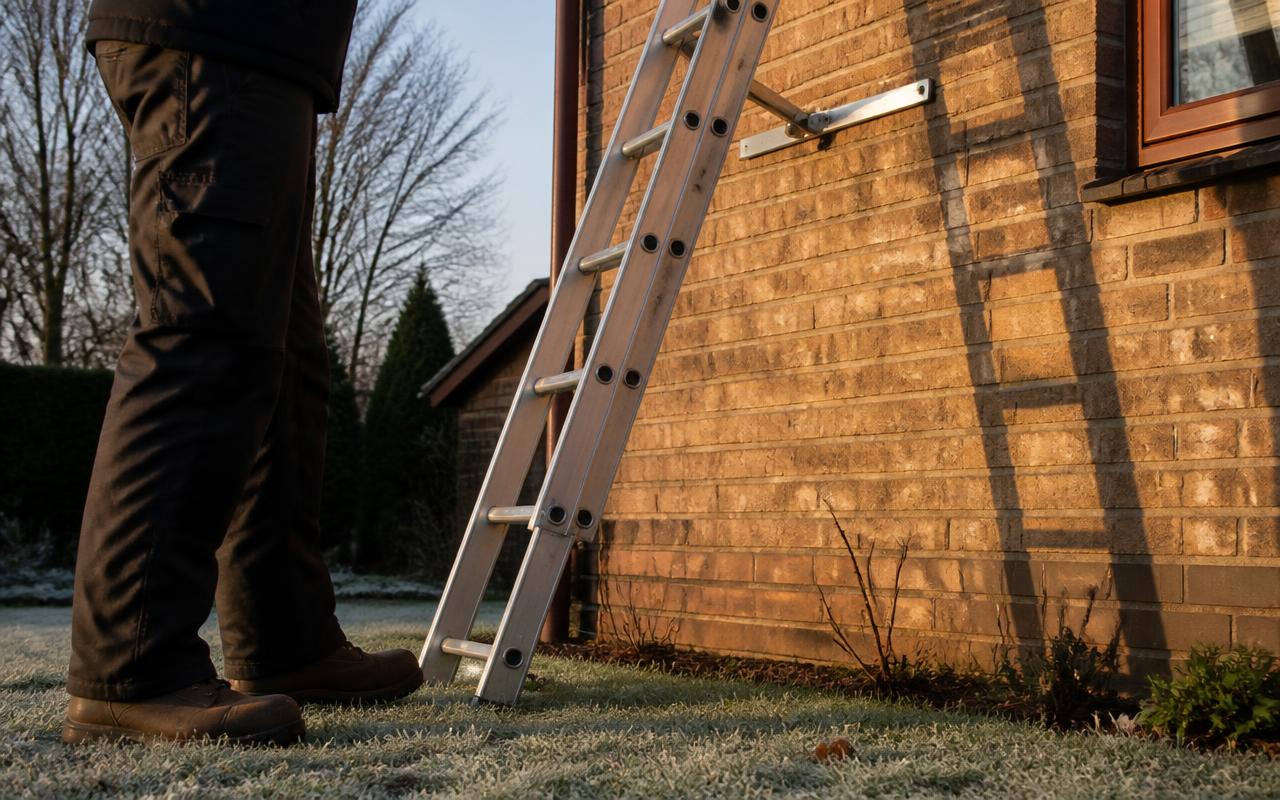
Ladder safety for Christmas decorations matters because falls from height are the single largest cause of fatal workplace accidents in the UK, and most happen from ladders below 4 metres — exactly the conditions of hanging lights in November and December.
The maths nobody runs
A typical homeowner hanging Christmas lights spends, optimistically, 3–5 hours at height over a day or two — on a ladder rarely tied off, on ground that's rarely level, in cold weather, often in failing light.
Compare that with a professional climber:
- Training
- Working at height qualification (PASMA, IPAF or similar)
- Harness
- Worn on anything above 3 metres
- Ladder
- Properly anchored, every time
- Ground support
- A spotter on every climb
- Insurance
- Full public liability, £2m–£5m
- First response
- A colleague trained to respond to an incident
The risk profile isn't comparable — the same fall that a trained climber walks away from can break a homeowner's wrist, hip or skull.
What actually happens in a fall
| Fall type | How it happens | Typical outcome |
|---|---|---|
| The overreach | Leaning sideways instead of moving the ladder tips it onto its side rails | Wrist or forearm fracture, ~6 weeks recovery, often reduced grip strength |
| The slip | Cold, damp ground; the ladder foot skates out from under the climber | Ankle, tibia or hip fracture, 3–6 months recovery |
| The top rung | Standing on the top rungs makes the ladder unstable, causing a backward overbalance | Back, head or neck injury — the worst outcomes, as the climber can't break the fall |
| The shock-then-fall | Wet weather and water ingress cause a shock, the climber loses grip | Combined electrical and fall injuries, often the most serious |
Insurance — read your policy
Most UK home insurance policies exclude personal injury sustained while working at height on your own property, usually buried in the personal accident or liability section. If you fall and break a hip hanging Christmas lights, your home insurance is unlikely to pay, and private medical cover may not either if it requires disclosure of how the injury occurred.
What a professional carries that you don't
- £5m public liability insurance, covering damage to your roof, gutters and facade
- Employer's liability insurance for the team
- Working at height training for every climber
- Class EN 131 commercial-grade, inspected ladders with stabilisers
- Harnesses and anchors for anything above 4 metres
- Cherry pickers and powered access platforms for trees and large facades
- A spotter on every climb
- Trained first response
- A take-down service, so the risk isn't repeated in January
A typical 4-bedroom detached home in the South East costs roughly £1,500–£1,900 for professional installation — against the very real, if small, risk of a six-figure medical event doing it yourself.
"But I've done it before"
Two things worth knowing:
- Risk doesn't accumulate evenly. A fall is a fixed-probability event on each climb, not something that gets less likely because you got away with it last year.
- Most new clients hire us after a near miss the previous year — they often mention it only on the second call.
The honest pitch
If you're determined to do it yourself:
- Use a proper ladder
- Have someone hold it, every climb
- Don't work in wet, wind, frost or fading light
- Don't lean sideways
- Stop the moment you feel unsteady
If you'd rather not — if you've ever stood at the top of a ladder in December and thought "this is silly" — that instinct is worth listening to.
Stay off the ladder this year. Request a tailored Christmas lighting quote →
Related reading
Ready when you are
Want it done properly, and yours to keep?
We design, install and maintain it across London and the South East, and the display is yours afterwards. Send a few photos and we'll price it.
Where to go next
More on diy safety
- Insurance, Ladders & Safety: Why DIY Christmas Lights Aren't Worth ItThe honest case against climbing your own roof in December — insurance gaps, ladder accidents, electrical risk, and what professional installers carry that you don't.
- Commercial-Grade vs Supermarket Christmas Lights: The Honest DifferenceWhy a £19 box from Tesco fails by mid-December — and what commercial-grade LED systems actually cost, look like and last for.
- Waterproof Outdoor Christmas Lights: IP Ratings, Connectors & British WeatherWhat IP44, IP65 and IP67 actually mean for your Christmas lights, and why the connectors — not the bulbs — are what fail in a wet British December.